


The Great Leveler: AI’s Quiet Revolution in African Financial Inclusion
Five years ago, Amaka couldn’t get a ₦50,000 loan. The 28-year-old runs a thriving online fashion business from Ikeja, but her bank saw only what wasn’t there: no salary account, no property deeds, no three-year credit history. Today, she manages a diversified investment portfolio, holds three insurance policies, and accesses credit when her business needs it all from her phone. The difference? Algorithms that finally “see” the ₦2.3 million flowing through her mobile money account annually.
Amaka’s story is quietly multiplying across Lagos, Nairobi, Kigali, and Johannesburg, signaling something profound: artificial intelligence isn’t just digitizing African finance it’s fundamentally democratizing who gets to participate in it.
Beyond the Banking Question
For years, we’ve obsessed over the “unbanked” in Africa. But financial exclusion runs deeper than lacking a savings account. It’s the entrepreneur who can’t get business insurance because manual underwriting makes small policies unprofitable. It’s the young professional locked out of investment products because wealth management firms can’t economically serve anyone with less than $50,000.
Nigeria illustrates this perfectly. Banking penetration has climbed to roughly 64%, yet insurance penetration languishes below 1%. Stock market participation? Even lower. Access to banking didn’t automatically cascade into access to the broader financial ecosystem. Until now.
Three Breakthrough Mechanisms
First, AI sees what was invisible. Traditional credit scoring looks at formal employment, property ownership, and existing credit history criteria that exclude most African entrepreneurs by design. AI-powered platforms now assess risk using alternative data: mobile money patterns, utility payments, e-commerce velocity, supplier relationship stability.
TymeBank in South Africa saw approval rates jump 22% while reducing defaults by 11% after deploying AI-driven credit assessment. The bank now serves over 7 million customers previously excluded from formal credit.
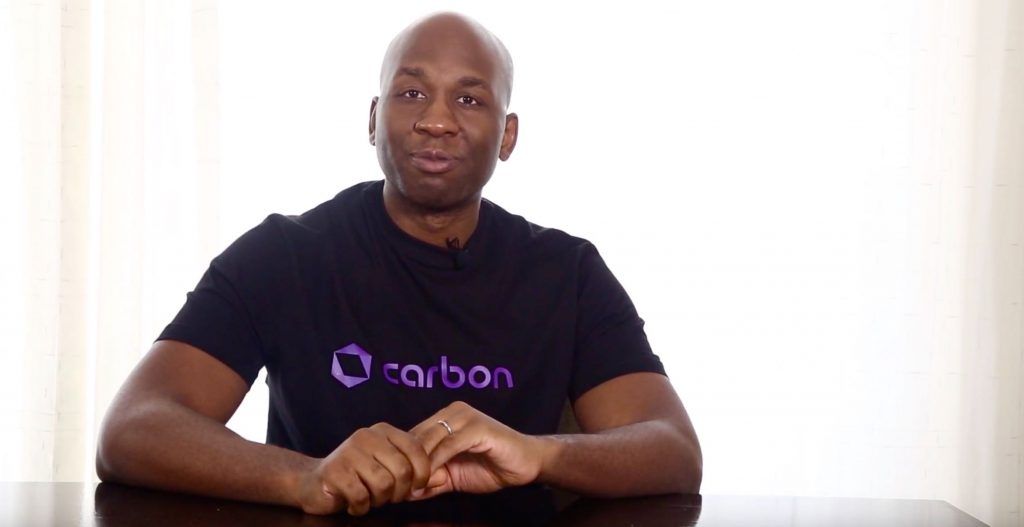
In Nigeria, digital lenders such as Carbon (formerly Paylater), FairMoney, and Renmoney underwrite loans based on data traditional banks ignored. Carbon alone has disbursed over $200 million in loans since 2016, with an average ticket size of just ₦50,000 – precisely the amount traditional banks deemed “uneconomical.” A fashion retailer with ₦200,000 monthly turnover but no collateral suddenly becomes creditworthy not through charity, but because AI can accurately price her risk.
Second, speed creates access. When credit decisions took two to three months, only large-ticket transactions made economic sense. AI-driven platforms now assess applications in two to six hours. Alder Consulting’s work with South African insurers shows one Johannesburg-based firm reduced its underwriting cycle by 55% while improving accuracy.
Nairobi-based Lami Technologies similarly enables instant policy issuance for products that once required three weeks of paperwork.
Third, AI makes small customers profitable. Processing a ₦50,000 loan manually costs roughly the same as processing a ₦5 million one. AI systems achieving 60-70% efficiency gains fundamentally change this equation. When your cost per decision drops by two-thirds, serving smaller customers shifts from loss-making charity to viable business.
Kenya’s microinsurance market demonstrates this elegantly. Insurers such as Britam, through its Bima platform, now profitably offer policies with $2-5 monthly premiums. Britam’s Bima product, using AI for automated underwriting and claims processing, covers over 1.5 million Kenyans with life insurance policies that would have been impossible to administer economically a decade ago.
The Compounding Effect
Access to one financial service increasingly unlocks others. Build credit history through an AI-assessed microloan, and insurance products become available. Maintain both in good standing, and investment platforms start making sense.
Nigeria’s Cowrywise and Risevest illustrate this democratization. These AI-powered platforms allow users to start investing with as little as ₦1,000 (roughly $1.20), accessing dollar-denominated assets previously reserved for high-net-worth individuals. Cowrywise now manages savings and investments for over 500,000 Nigerians.
In Kigali, platforms like Mergims and Exuus bundle services precisely because AI makes this cross-pollination economical.
Kenya’s Apollo Agriculture demonstrates the leapfrog potential: by combining satellite imagery, soil data, weather patterns, and farmer transaction histories, Apollo’s AI models predict crop yields and default risk with 85% accuracy enabling it to profitably serve over 500,000 smallholder farmers banks wouldn’t touch.
Two Practical Takeaways
For entrepreneurs: Your digital financial footprint is now an asset. Consistent mobile money transactions, reliable utility payments, active e-commerce history, and maintained supplier relationships are no longer invisible. Lagos-based fashion entrepreneur Temi Otedola built creditworthiness entirely through her Instagram-based distribution business. When she applied for working capital through FairMoney, the algorithm assessed her two-year transaction history, customer reviews, and supplier payment consistency approving a ₦500,000 facility within six hours. No collateral, no salary slips, no property deeds required.
For the ecosystem: The real opportunity isn’t digitizing old processes faster, it’s creating entirely new risk assessment models suited to African economic realities. A Kenyan farmer’s M-Pesa history tells you vastly more about creditworthiness than a non-existent salary record. We’re not copying Western financial inclusion playbooks, we’re leapfrogging them.
The Quiet Revolution
Walk through Ikeja (in Lagos-Nigeria), and you won’t see the infrastructure of this transformation. No dramatic new bank branches, no ribbon-cutting ceremonies. Just millions of people like Amaka quietly accessing financial services that were practically unreachable five years ago.
The numbers tell the story: Nigeria‘s digital lending market grew from virtually nothing in 2015 to disbursing over $500 million in 2024. Kenya‘s insurance penetration is climbing as AI-enabled microinsurance reaches previously “uninsurable” populations. South Africa‘s alternative credit market now serves 8 million people excluded by traditional bureaux.
The question isn’t whether AI will transform financial access across Africa watching approval rates climb 20-30%, operational costs drop 60-70%, and previously “uneconomical” customers become viable — that question is answered. What remains is deploying these tools responsibly, ensuring the algorithms that finally see the unbanked don’t simply encode old biases in new code.
Early signs are promising. The Central Bank of Nigeria‘s 2023 regulatory framework for alternative credit scoring explicitly mandates algorithmic transparency and bias testing. Kenya’s Insurance Regulatory Authority now requires AI-driven underwriting systems to demonstrate fairness across demographic groups.
Done right, AI might finally deliver on the promise that mobile money started: making financial exclusion in Africa not a permanent condition, but an increasingly outdated memory.
Meekam K. Mgbenwelu is Editor-at-Large at Numeris Media (Publishers of Bank & Entrepreneur Africa), a member of the Fintech Association of Nigeria, and a Certified leadership coach. He writes on innovation, digital transformation, and inclusive growth across Africa’s emerging markets.
Numeris Média is media partner to GITEX Africa Morocco 2026